
Sitemap
Overview

Concept and Goals
Concept and Goals of Sustainable Development
The term “sustainable development” was formally defined by the World Commission on Environment and Development (WCED) in its 1987 report, Our Common Future, as “development that meets the needs of the present without compromising the ability of future generations to meet their own needs.” Since then, the concept has gained global recognition and has been widely used in global sustainability discourse.
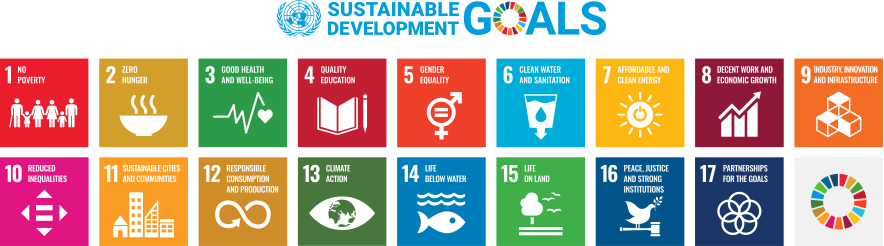
Sustainable Development Goals
The Sustainable Development Goals (SDGs), adopted as a universal agenda at the 70th UN General Assembly in 2015 with a commitment to achieve them by 2030, consist of 17 shared goals for humanity to realize the vision of sustainable development.
Guided by the “Leave no one behind” (LNOB) principle, the SDGs provide a global framework with 17 goals and 169 specific targets across five key areas: People, Planet, Prosperity, Peace, and Partnership.